
Top 10 Burp Suite Extensions Every Pentester Should Use
By Sabina Llewellyn,
Penetration Tester Team, Datafarm Company Limited
When it comes to web application security testing, Burp Suite is the go to tool for professionals and bug bounty hunters. While its core features are powerful, the real magic happens when you extend its capabilities using plugins from the BApp Store. These extensions can dramatically improve your efficiency, uncover hidden vulnerabilities, and automate tedious tasks.
In this article, we’ll explore ten must have Burp Suite extensions that every pentester should consider using, along with practical insights into how they fit into real-world testing workflows.
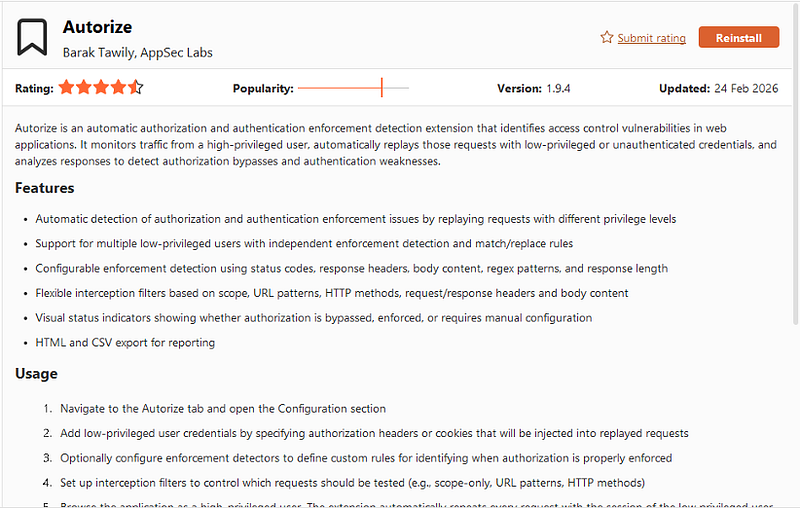
1. Autorize
Authorization vulnerabilities, such as IDOR (Insecure Direct Object Reference), are among the most common and impactful bugs. Autorize helps automate the process of detecting these issues by replaying requests with different user credentials.
Instead of manually switching sessions and repeating requests, Autorize does this in real time. You simply configure a low-privileged user session, and the extension compares responses to identify unauthorized access.
Why it matters: It saves time and increases accuracy when testing access control flaws.
2. Active Scan++
Burp Suite’s built-in scanner is powerful, but Active Scan++ enhances it by adding additional payloads and checks for edge-case vulnerabilities.
It includes checks for things like XML injection, server-side template injection (SSTI), and subtle XSS variations that might otherwise go unnoticed.
Why it matters: It improves coverage and helps catch non obvious vulnerabilities during automated scans.
3. Logger++
Burp’s default Proxy history can become overwhelming, especially when testing large applications. Logger++ provides advanced logging and filtering capabilities, allowing you to organize and search traffic more effectively.
You can filter requests based on keywords, status codes, or custom rules, making it much easier to identify sensitive endpoints or unusual behavior.
Why it matters: Better visibility means faster analysis and fewer missed attack surfaces.
4. Param Miner
Modern applications often include hidden or undocumented parameters that are not visible in the frontend. Param Miner helps uncover these by brute-forcing parameter names intelligently.
It can discover hidden GET, POST, and header parameters that may trigger unexpected functionality, such as debug modes or admin features.
Why it matters: Hidden parameters often lead to high-impact vulnerabilities.
5. Turbo Intruder
Turbo Intruder is designed for high-performance attacks. It allows you to send large volumes of requests quickly and precisely, making it ideal for race condition testing and brute-force attacks.
Unlike the standard Intruder tool, Turbo Intruder is scriptable and optimized for speed, enabling complex attack scenarios such as bypassing rate limits or exploiting timing issues.
Why it matters: Essential for advanced exploitation techniques that require precision and speed.
6. Collaborator Everywhere
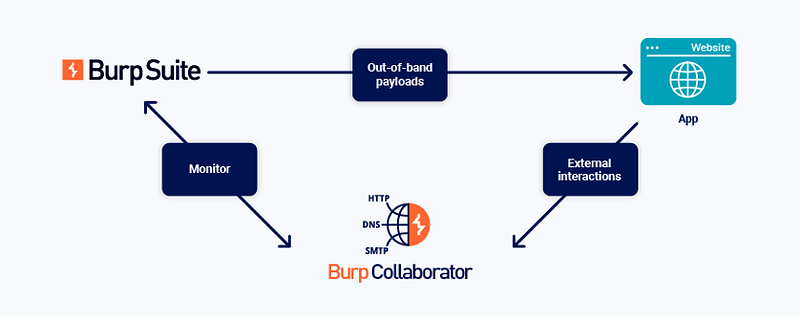
Some vulnerabilities, like blind XSS, SSRF, and XXE, do not produce visible responses in the application. Collaborator Everywhere helps detect these by injecting payloads that trigger external interactions.
It integrates with Burp Collaborator to monitor out-of-band (OAST) interactions, alerting you when the server makes unexpected external requests.
Why it matters: It uncovers vulnerabilities that traditional testing methods might completely miss.
[ picture credit: Burp Collaborator — PortSwigger ]
7. JSON Beautifier
With the rise of APIs and microservices, testers often deal with large and complex JSON responses. JSON Beautifier formats these responses into a readable structure, making analysis much easier.
Instead of manually parsing raw JSON, you can instantly understand the data structure and identify interesting fields or patterns.
Why it matters: Improves efficiency when testing REST and GraphQL APIs.
8. Retire.js
Outdated JavaScript libraries are a common source of vulnerabilities. Retire.js scans applications for known vulnerable libraries and alerts you when it detects them.
It checks versions of popular libraries like jQuery, Angular, and others against known vulnerability databases.
Why it matters: Provides quick wins, especially in bug bounty scenarios.
9. Backslash Powered Scanner
This extension focuses on detecting anomalies in how applications handle input. By sending unusual payloads, it identifies discrepancies in responses that may indicate deeper issues.
It’s particularly useful for discovering parsing inconsistencies, request smuggling possibilities, and other subtle bugs.
Why it matters: Helps uncover complex vulnerabilities that are difficult to detect manually.
10. CSRF Scanner
Cross-Site Request Forgery (CSRF) remains a relevant threat, especially in poorly secured applications. CSRF Scanner automates the process of identifying endpoints that lack proper CSRF protection.
It analyzes requests and checks whether anti-CSRF tokens are present and validated correctly.
Why it matters: Quickly identifies endpoints vulnerable to unauthorized actions.
How to Combine These Extensions Effectively
Installing extensions is only part of the equation. Knowing when and how to use them is what makes a skilled pentester.
A typical workflow might look like this:
- Reconnaissance Phase: Before attacking anything, you need to understand the application. Use Logger++ to organize traffic and Param Miner to discover hidden inputs.
- Initial Testing: Run Active Scan++ and Backslash Powered Scanner to identify potential vulnerabilities.
- Advanced Exploitation: Use Turbo Intruder for race conditions and Collaborator Everywhere for blind vulnerabilities.
- Validation & Analysis: Use Autorize to test access control and JSON Beautifier to analyze API responses.
- Quick Checks: Run Retire.js and CSRF Scanner for low-hanging fruit.
This layered approach ensures thorough coverage while maintaining efficiency.
Most beginners use extensions as isolated tools. Advanced testers use them as a system.
The difference is not the tools, it’s the workflow. If you can combine these extensions strategically, you’ll find bugs faster, discover deeper vulnerabilities, produce higher-quality reports and ultimately, become a far more effective pentester.
Final Thoughts
Burp Suite is already a powerful tool, but these extensions elevate it to another level. They not only automate repetitive tasks but also enable advanced testing techniques that would be difficult to perform manually.
However, tools alone don’t make a great pentester. The real value comes from understanding how vulnerabilities work and applying these extensions strategically during your assessments.
If you’re serious about offensive security, mastering these extensions and integrating them into your workflow can significantly improve both your productivity and your results.
Pro Tip: Don’t just use these tools document your findings. Turning your experiences into writeups or blog posts is one of the best ways to deepen your understanding and build credibility in the security community.